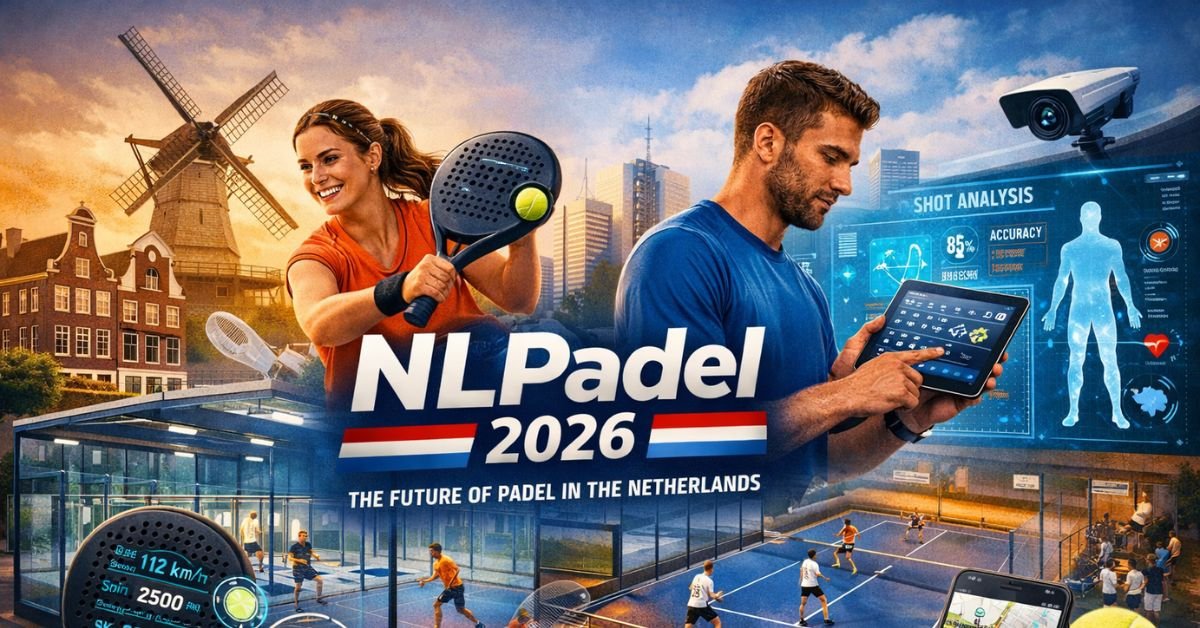
Padel has exploded across the Netherlands, becoming one of the nation’s fastest-growing sports. With over 180,000 registered players and more than 1,500 courts spanning from Amsterdam to Maastricht, this tennis-squash hybrid is capturing the hearts of Dutch sports enthusiasts everywhere. At the center of this revolution stands NLPadel—both the official ecosystem managed by the Royal Dutch Lawn Tennis Association (KNLTB) and the emerging tech-enhanced version of the sport.
Whether you’re a complete beginner curious about trying padel for the first time or an experienced player looking to understand how artificial intelligence and smart technology are transforming the game, this comprehensive guide covers everything you need to know about NLPadel in 2026.
What is NLPadel? More Than Just a Game
The term ‘NLPadel’ carries a dual meaning that reflects both the traditional sport and its innovative evolution:
- The Dutch Padel Ecosystem: NLPadel refers to the entire padel infrastructure in the Netherlands (NL), including the official platform managed by the KNLTB, clubs, competitions, rankings, and the growing community of players across the country.
- Tech-Enhanced Padel: NLPadel also represents the cutting-edge integration of Artificial Intelligence, Neuro-Linguistic Programming techniques, smart rackets, performance analytics, and data-driven coaching into the traditional sport—transforming how Dutch players train and compete.
At its core, padel is a racket sport that combines elements of tennis and squash. Played on a smaller court (20m x 10m) surrounded by glass walls and metal fencing, padel is typically enjoyed in doubles format. The walls are part of the playing surface, creating dynamic rallies where balls can bounce off glass panels, adding an exciting tactical dimension that doesn’t exist in traditional tennis.
Padel vs Tennis: Key Differences
| Feature | Padel | Tennis |
| Court Size | 20m x 10m | 23.77m x 10.97m (doubles) |
| Racket | Solid, perforated (no strings) | Strung racket |
| Walls | Part of play (glass & mesh) | No walls |
| Serve | Underarm only | Overhand |
| Learning Curve | Beginner-friendly, quick to enjoy | Steeper learning curve |
| Typical Format | Doubles (2v2) | Singles or doubles |
Why Padel is Exploding in the Netherlands
The Netherlands has witnessed remarkable growth in padel participation. From just 200 courts in 2020, the country now boasts over 1,500 courts in 2026, with more than 180,000 registered players actively participating in the sport. This exponential growth isn’t accidental—it’s driven by padel’s unique characteristics that align perfectly with Dutch culture and urban lifestyle.
Key Growth Factors:
- Instant Accessibility: Unlike tennis, which can take months to play competently, padel allows beginners to enjoy exciting rallies from their very first session. The smaller court and forgiving wall play mean less running and more action, making it perfect for all fitness levels.
- Social by Design: Padel is inherently social. The doubles format ensures constant interaction, and the smaller court keeps all four players engaged throughout the match. It’s become a favorite for friend groups, corporate team-building, and family gatherings.
- Urban-Friendly Infrastructure: In space-constrained Dutch cities, padel courts can be built on rooftops, in converted warehouses, or in compact urban spaces. Many facilities feature indoor courts, making it an all-weather sport perfect for the Netherlands’ unpredictable climate.
- Health & Fitness Benefits: Padel provides excellent cardiovascular exercise, improves reflexes and coordination, and burns approximately 400-600 calories per hour. The short bursts of intense activity combined with strategic play offer both physical and mental health benefits.
- Inclusive and Multi-Generational: From youth programs to OldStars initiatives for players 65+, and wheelchair padel adaptations, NLPadel actively promotes inclusivity. The sport bridges age gaps, with families often playing together and corporate leagues mixing experience levels.
The Social & Community Heartbeat
What truly sets padel apart is its community-driven culture. Dutch padel clubs have evolved into social hubs where people form lasting friendships beyond the court. The KNLTB’s NLPadel platform facilitates this connection through organized leagues, social tournaments called ‘Americanos,’ and WhatsApp communities where players can find partners at their skill level.
Many clubs host weekly social events, offering themed tournaments and post-match gatherings. This ‘third half’ culture—enjoying food and drinks after playing—has become a defining characteristic of Dutch padel, transforming it from mere exercise into a lifestyle activity.
How to Start Your NLPadel Journey: A Step-by-Step Guide
Ready to experience padel for yourself? Here’s your complete roadmap to getting started in the Dutch padel ecosystem.
Step 1: Finding Courts & Booking in Major Dutch Cities
The Netherlands offers excellent padel infrastructure across all major cities. Here’s where to find courts and how to book them:
Amsterdam:
- Padel NEXT (Willem de Zwijgerlaan 338C): 9 indoor courts, vibrant atmosphere, weekend Americano tournaments. Booking via Playtomic.
- B. Amsterdam (Johan Huizingalaan 763a): 12 indoor courts including a 1v1 court, rooftop bar, integrated workspace. Free for members during off-peak hours.
- The Padellers Amsterdam-West (Condensatorweg 48): 6 courts, extensive WhatsApp community, monthly tournaments.
- Frans Otten Stadium (IJsbaanpad 43): Historic venue with both tennis and padel facilities.
Rotterdam & Utrecht:
Both cities feature multiple The Padellers locations, Plaza Padel clubs, and independent facilities. Major clubs include Peakz Padel (with 20 locations nationwide) and local tennis clubs that have added padel courts to their offerings.
Booking Platforms:
- KNLTB Meet & Play: Official booking platform, integrates with club memberships
- Playtomic: Popular app for finding courts, booking times, and connecting with other players
- Padel Mates: Social platform for matching players at similar skill levels
Pricing Guide:
- Court rental (Pay & Play): €20-€35 per hour for the court (split among 4 players = €5-€9 per person)
- Racket rental: €3-€5 per session
- Club membership: Varies by location, typically €30-€60 per month with booking priority and discounted rates
- Equipment purchase: Beginner rackets €50-€100, advanced models €150-€250
Step 2: Understanding the Basics – Rules, Scoring & Equipment
The Court & Equipment:
- Court dimensions: 20m × 10m, divided by a net (similar to tennis but smaller)
- Walls: Glass panels up to 3m high on the back, 2m on the sides, topped with metal fencing
- Rackets: Solid paddles with perforated surface, no strings, typically weighing 340-390g
- Balls: Similar to tennis balls but with slightly less pressure for controlled bounce
Basic Rules:
- Serving: Always underarm, must bounce in the service box diagonally opposite. Server stands behind the service line.
- Scoring: Identical to tennis (15, 30, 40, game). Matches are typically best of 3 sets, with sets played to 6 games.
- Wall Usage: Balls can bounce off walls on your side before returning them. A ball that hits the opponent’s wall before bouncing is out.
- Point Winning: Point ends when the ball bounces twice on one side, goes out of bounds, hits the fence/ceiling directly, or hits the opponent’s wall before bouncing.
What to Wear:
- Athletic clothing comfortable for movement
- Court shoes with non-marking soles and good lateral support (not running shoes)
- Optional: wristbands, headbands, sports sunglasses for outdoor courts
The Future is Smart: How Technology is Shaping NLPadel
While the traditional padel experience remains the foundation, the Netherlands is pioneering the integration of cutting-edge technology into the sport—creating what many call ‘Smart Padel’ or tech-enhanced NLPadel. This innovation addresses a key insight: players improve faster with data-driven feedback rather than relying solely on intuition.
From Smart Rackets to Virtual Coaching
1. Smart Racket Technology
Companies like PadelPlay have developed sensors that attach to standard racket grips, measuring:
- Shot speed and spin rate in real-time
- Contact points and swing angles
- Shot classification (forehand, backhand, volleys, smashes)
- Movement patterns and court positioning
These lightweight sensors (approximately 12g) sync with mobile apps to provide instant post-match analysis. Players can see exactly where their technique needs improvement rather than guessing.
2. AI-Powered Video Analysis
Platforms like SPASH’s Match Analyzer use artificial intelligence to automatically analyze match recordings:
- Automatically detects rallies and tracks nearly 20 performance statistics
- Identifies positioning errors (time spent in ‘no man’s land’)
- Measures net approach success and lob accuracy
- Provides shareable highlights and social features for community engagement
These systems require no wearables or sensors—just standard court cameras with AI processing.
3. Wearable Biometric Devices
Fitness trackers and smartwatches integrated with padel apps monitor:
- Heart rate zones and cardiovascular stress
- Calories burned and distance covered
- Fatigue indicators and recovery metrics
- Muscle activation and movement efficiency
4. Personalized AI Coaching
Advanced clubs offer AI coaching apps that:
- Analyze your playing style and identify specific weaknesses
- Create personalized training plans based on your skill level and goals
- Provide tactical recommendations for specific opponents
- Track progress over time with detailed performance dashboards
Some facilities are even experimenting with AR (augmented reality) smart glasses that overlay coaching tips directly in your field of vision during practice sessions.
Availability in the Netherlands:
While these technologies are becoming more widespread, availability varies by club. Progressive facilities in Amsterdam, Rotterdam, and Utrecht are leading adoption. When booking courts, ask about:
- Match recording services (many clubs now offer this)
- Smart racket sensor availability for purchase or rental
- Partnership with tech platforms like PadelPlay or SPASH
- Coaches trained in data-driven instruction methods
Joining the Community: Tournaments, Leagues & More
Padel in the Netherlands is more than recreational play—it’s a structured ecosystem with competitive opportunities for all skill levels.
KNLTB Official Structure:
The Royal Dutch Lawn Tennis Association (KNLTB) serves as the governing body for padel in the Netherlands, providing:
- Official Rules & Standards: Maintains standardized rules aligned with International Padel Federation (FIP) regulations
- Dynamic Rating System (DSS): Every registered player receives a skill rating that updates based on match results, ensuring competitive balance
- Coach Certification: Standardized training programs for padel instructors ensuring quality coaching across the country
- National Rankings: Official leaderboards tracking top performers and national team selections
Competition Pathways:
- Club Competitions (Clubcompetitie Padel): Seasonal team leagues at various skill levels where clubs compete against each other
- Local Tournaments: Weekend events at clubs, often with social formats like ‘Americanos’ where everyone plays with and against different partners
- Regional Circuits: Competitive platforms for ambitious players to earn ranking points
- National Championships (NGK): Prestigious events showcasing the Netherlands’ best players across age categories
- Youth & Junior Programs: Age-specific tournaments designed to identify and develop young talent
- Corporate Leagues: Company-sponsored team competitions ideal for team building
Inclusive Programs:
- Wheelchair Padel: Adapted rules allowing two ball bounces, with accessible venues and dedicated tournaments
- OldStars Padel: For players 65+, with slightly modified rules focusing on safe movement and social connection
- Women’s Initiatives: KNLTB actively promotes female participation with women-specific tournaments, events, and community programs aiming to reach 70,000+ female players
Getting Involved:
- Join a club or purchase a Tournament Pass (Toernooipas) to participate in official competitions
- Check the NLPadel.nl calendar for upcoming tournaments in your region
- Join club WhatsApp groups to find partners and stay informed about events
- Sign up for beginner clinics to build confidence before entering competitions
NLPadel FAQ: Your Questions, Answered
Q: Is NLPadel an official organization?
A: Not exactly. NLPadel refers to two things: (1) the official padel ecosystem in the Netherlands managed by the KNLTB, including the platform at NLPadel.nl, and (2) the broader concept of tech-enhanced padel incorporating AI and smart devices. The KNLTB is the official governing body.
Q: How do I find and book a padel court in the Netherlands?
A: Use booking platforms like KNLTB Meet & Play, Playtomic, or Padel Mates. Search for clubs in your city on NLPadel.nl. Popular Amsterdam venues include Padel NEXT, B. Amsterdam, and The Padellers. Courts typically cost €20-€35 per hour (€5-€9 per person in doubles).
Q: Can beginners play padel? Is it easier than tennis?
A: Absolutely! Padel is famously beginner-friendly. The smaller court, underarm serve, and wall play make it much easier to start enjoying rallies from day one compared to tennis. Most players have fun in their very first session.
Q: What equipment do I need for my first NLPadel game?
A: Just comfortable athletic clothing and court shoes with good lateral support. Most clubs rent rackets (€3-€5) and provide balls, so you can try the sport before investing in your own equipment. If you decide to buy, beginner rackets cost €50-€100.
Q: What does AI and technology have to do with NLPadel?
A: Technology is enhancing training and performance analysis. Some clubs offer smart racket sensors that track shot data (speed, spin, contact points) and AI coaching apps that analyze match video to provide personalized improvement tips. This tech-forward approach is sometimes called ‘Smart Padel’ and represents the future of player development in the Netherlands.
Q: What is the governing body for padel in the Netherlands?
A: The Royal Dutch Lawn Tennis Association (KNLTB) oversees official tournaments, rankings, rules, and coach certification for padel in the Netherlands. The KNLTB merged with the Dutch Padel Federation in 2020 to provide unified governance.
Q: Do I need a membership to play?
A: No! You can book courts through Pay & Play options without membership. However, memberships (typically €30-€60/month) offer benefits like priority booking, discounted rates, and access to club events. Memberships or Tournament Passes are required for official league play and ranking tournaments.
Q: Can I play padel indoors year-round?
A: Yes! Many Dutch padel facilities feature indoor courts, making it perfect for year-round play regardless of weather. This is particularly valuable in the Netherlands’ unpredictable climate.
Q: Is padel a good workout?
A: Definitely! Padel provides excellent cardiovascular exercise, burns 400-600 calories per hour, improves reflexes and coordination, and offers both physical and mental health benefits. The short bursts of activity combined with strategic thinking make it engaging for body and mind.
Ready to Join the NLPadel Revolution?
The Netherlands has embraced padel with remarkable enthusiasm, creating an ecosystem that welcomes everyone from curious beginners to competitive athletes. Whether you’re drawn to the social nature of the sport, the accessibility for all skill levels, or the exciting integration of smart technology, NLPadel offers a complete experience.
The combination of official KNLTB governance, widespread infrastructure across Dutch cities, innovative tech enhancements, and a vibrant community culture has positioned the Netherlands as a European leader in padel development. With over 1,500 courts and counting, you’re never far from your next game.
CLICK HERE FOR MORE IMFORMATIVE BLOG POSTS

Jesse Zanger is the managing editor of aldalive.com and is based in New York City. He earned a degree in Philosophy from Hamilton College in 1998. Jesse has spent his entire professional career in New York, reporting on both local and national news for MacNeil/Lehrer Productions, Spectrum News NY1, Fox News, and 5ebackgrounds.com. During his time at local News Channel, he was part of the team that helped introduce the on-screen news crawl shortly after 9/11. As a member of the leadership team at 5ebackgrounds.com, the site has received notable industry honors, including a New York State Broadcasters Association Award (2019) and a Regional Edward R. Murrow Award (2017).