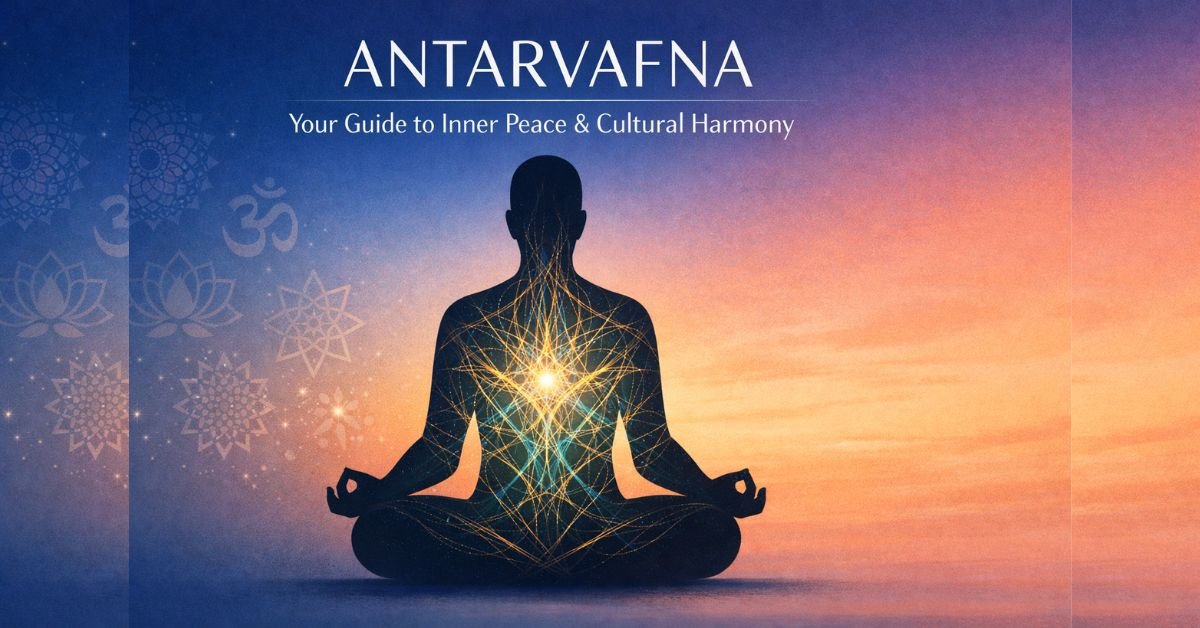
If you’ve searched for “antarvafna,” you’ve likely encountered something puzzling: two completely different ideas sharing the same name. One describes a powerful tool for cultivating inner peace through self-reflection. The other presents a vision for creating harmony in our increasingly interconnected world. This guide clarifies both meanings, explores their profound benefits, and shows you practical ways to apply them in your life starting today.
What is Antarvafna? Demystifying the Two Meanings
The confusion surrounding antarvafna isn’t your fault. This term genuinely carries two distinct interpretations, each valuable in its own right.
Meaning 1: The Ancient Practice of Inner Weaving
The first interpretation of antarvafna refers to a contemplative practice rooted in ancient wisdom traditions. Think of it as a structured approach to self-awareness that goes beyond simple meditation.
Etymology & Origins: “Antar” (Inner) + “Vafna” (Weaving/Reflection)
The word breaks down into two Sanskrit-derived components. “Antar” means “inner” or “within,” while “vafna” relates to “weaving” or “reflection.” Together, they suggest the act of weaving together the threads of your inner experience, creating a coherent understanding of your mental and emotional landscape.
Core Principle: Observing Without Judgment
Unlike practices that aim to quiet the mind or achieve a blank state, antarvafna encourages you to actively observe your thoughts, emotions, and sensations without labeling them as good or bad. You become a compassionate witness to your own inner world, noticing patterns and gaining insights that naturally lead to greater clarity and peace.
Meaning 2: The Modern Philosophy of Cultural Integration
The second interpretation positions antarvafna as a framework for understanding how different cultures can interact, exchange ideas, and create something new while maintaining their distinct identities.
Etymology & Origins: A New Term for an Ancient Human Impulse
While the linguistic roots may echo Sanskrit, this usage represents a modern conceptual framework. It captures humanity’s age-old ability to learn from other cultures, adopt beneficial practices, and evolve together without erasing individual cultural identities.
Core Principle: Unity in Diversity
This version of antarvafna celebrates the idea that cultures can remain distinct while contributing to a richer global tapestry. It’s about conscious cultural exchange rather than homogenization, about finding common ground while honoring what makes each tradition unique.
Antarvafna for Self: Your Guide to Inner Reflection
Now let’s focus on the personal practice of antarvafna and how you can use it to transform your relationship with yourself.
Antarvafna vs. Meditation: A Crucial Difference
Many people assume antarvafna is just another word for meditation, but there are important distinctions:
| Aspect | Traditional Meditation | Antarvafna |
|---|---|---|
| Primary Focus | Quieting the mind, achieving stillness | Active observation and understanding |
| Approach to Thoughts | Often redirecting attention away from thoughts | Examining thoughts and emotions with curiosity |
| Goal | Present-moment awareness, mental calm | Self-knowledge and pattern recognition |
| Method | Passive reception, letting go | Active inquiry and reflection |
| Outcome | Reduced mental chatter, relaxation | Deeper self-understanding and integration |
Both practices offer tremendous value, and they can complement each other beautifully. Meditation creates the calm foundation, while antarvafna builds self-awareness on that foundation.
The Proven Benefits: Why Look Within?
Developing a regular antarvafna practice offers wide-ranging benefits that touch every aspect of your life.
For Mental & Emotional Health
When you practice antarvafna consistently, you begin to notice how your mind works. This awareness itself becomes therapeutic. Research in cognitive psychology shows that observing thoughts without judgment reduces their emotional charge, leading to decreased anxiety and improved emotional regulation.
You’ll likely experience reduced stress as you learn to identify triggers before they escalate, greater emotional stability as you understand your patterns, improved mood through increased self-compassion, and better sleep quality as mental rumination decreases.
For Personal & Professional Growth
The self-knowledge gained through antarvafna translates directly into real-world competence. You make better decisions because you understand your biases and tendencies. Your emotional intelligence increases as you recognize emotions in yourself and therefore in others. Problem-solving improves when you can observe challenges without the fog of reactive emotions. Your relationships deepen as you bring more authentic presence and less unconscious reaction to your interactions.
How to Practice: A Simple 5-Step Beginner’s Framework
Starting an antarvafna practice doesn’t require special equipment, extensive training, or hours of time. Here’s a straightforward approach that works.
Step 1: Create Your Sacred Space
Designate a specific spot in your home for this practice. It doesn’t need to be elaborate—a comfortable chair, a cushion on the floor, or even a specific corner of your bedroom works perfectly. The key is consistency. Your mind will begin to associate this space with introspection, making it easier to settle into the practice.
Step 2: Set a Time and Gentle Intention
Start with just 10-15 minutes daily. Morning often works well, before the day’s demands take over, but choose whatever time you can maintain consistently. Before you begin, set a gentle intention. This isn’t a rigid goal but rather a question to guide your attention, such as “What am I feeling right now?” or “What patterns am I noticing in my reactions lately?”
Step 3: Observe and Name Your Inner State
Close your eyes or soften your gaze. Begin noticing what’s present in your awareness. Are there physical sensations—tension in your shoulders, warmth in your chest, heaviness in your limbs? What emotions are present? Name them simply: anxiety, excitement, sadness, contentment. What thoughts are circulating? Notice them without getting caught in their content. The act of naming creates just enough distance to observe clearly.
Step 4: Journal Your Insights
After your observation period, spend five minutes writing down what you noticed. Don’t edit or analyze—just capture the experience. You might write about patterns you recognized, surprising emotions that emerged, or connections you hadn’t seen before. This journaling solidifies insights and creates a record you can review to spot long-term patterns.
Step 5: Integrate Learnings into Daily Life
The real value of antarvafna emerges when insights move from your practice space into your daily life. If you noticed a tendency to feel anxious when facing uncertainty, you can recognize that pattern when it arises at work. If you observed how criticism triggers defensiveness, you can catch that reaction before responding to feedback. Integration is where understanding becomes transformation.
Overcoming Common Challenges
Every practitioner faces obstacles. Here’s how to work with the most common ones.
Restlessness and distraction are completely normal, especially when starting. Your mind isn’t used to this kind of attention. When you notice restlessness, make it part of your observation. “I’m feeling restless right now. What does that feel like in my body? What’s underneath this urge to move or check my phone?” Curiosity transforms obstacles into opportunities.
Emotional discomfort can surface when you truly pay attention. You might encounter sadness, anger, or anxiety you’ve been avoiding. This is actually a sign the practice is working. Remember, you’re observing, not fixing. You don’t need to make difficult emotions go away—just acknowledge them with compassion.
Consistency challenges most people. Life gets busy, motivation wanes, and suddenly weeks have passed. If this happens, start again without self-judgment. The practice itself teaches you that lapses are just patterns to observe, not failures to condemn.
Antarvafna for Society: A Blueprint for Cultural Harmony
Beyond personal practice, antarvafna as a cultural philosophy offers a framework for navigating our diverse, interconnected world.
Key Principles of Global Antarvafna
Several core principles guide this approach to cultural exchange and integration.
Cultural equality means no culture is inherently superior to another. Each has developed unique wisdom, practices, and perspectives shaped by its specific history and environment. This principle rejects both cultural supremacy and uncritical cultural relativism in favor of respectful engagement.
Rooted globalism encourages people to remain connected to their cultural heritage while engaging openly with other traditions. You don’t need to abandon your roots to appreciate and learn from others. In fact, being grounded in your own tradition often makes cross-cultural learning richer and more meaningful.
Conscious exchange emphasizes intentionality in how we adopt practices or ideas from other cultures. It asks us to understand context, honor origins, and engage thoughtfully rather than superficially borrowing aesthetic elements while ignoring deeper meanings.
Creative synthesis recognizes that when cultures interact authentically, something new and valuable can emerge that honors both traditions while creating something that didn’t exist before.
Antarvafna vs. Globalization and Cultural Appropriation
Understanding how antarvafna differs from these related concepts clarifies its unique value.
Globalization often involves economic and cultural homogenization, where dominant cultures overshadow smaller ones. Antarvafna, by contrast, preserves cultural distinctiveness while fostering genuine exchange. It’s about dialogue, not dominance.
Cultural appropriation takes elements from a culture (often a marginalized one) without understanding, respect, or proper credit, typically for aesthetic or commercial purposes. Antarvafna requires deep engagement, respect for origins, and acknowledgment of sources. It asks, “How can we learn from and honor this tradition?” rather than “What can we take from it?”
Historical Examples of Antarvafna in Action
Throughout history, periods of rich cultural exchange demonstrate antarvafna principles, even if they didn’t use this term.
The Silk Road facilitated more than trade in goods. Buddhist philosophy traveled from India to China and Japan, transforming and being transformed in the process. Paper-making techniques, astronomical knowledge, and artistic styles moved between civilizations. Each culture maintained its identity while being enriched by others.
The Renaissance in Europe emerged partly through the recovery of classical Greek and Roman texts preserved by Islamic scholars. Arab innovations in mathematics, medicine, and philosophy influenced European thinkers, who built upon these foundations while developing their own approaches.
The birth of jazz in early 20th-century America exemplifies cultural synthesis. African rhythmic traditions, European harmonic structures, and American experiences combined to create something entirely new that honored all its roots while becoming its own distinct form.
Applying Antarvafna in Modern Life
How can we practice cultural antarvafna today?
In education, this means teaching history and culture from multiple perspectives, encouraging students to learn languages and engage with literature from diverse traditions, and creating environments where different cultural backgrounds are resources for learning rather than obstacles to overcome.
In business, antarvafna suggests building teams that genuinely value diverse perspectives, adapting practices from different business cultures thoughtfully, and creating products and services that respect cultural contexts rather than imposing one-size-fits-all solutions.
In community, practice antarvafna by attending cultural events outside your own tradition with genuine curiosity, supporting immigrant-owned businesses and learning their stories, engaging in cross-cultural dialogue projects, and creating spaces where different communities can share traditions and learn from each other.
Frequently Asked Questions About Antarvafna
What does antarvafna mean?
Antarvafna has two primary meanings. The first refers to an ancient practice of inner reflection and self-observation, where you actively examine your thoughts, emotions, and patterns with compassionate awareness. The second describes a modern philosophy of cultural integration, emphasizing how different cultures can exchange ideas and practices while maintaining their distinct identities. Both meanings share a theme of conscious integration—whether of aspects of yourself or elements of different cultures.
Is antarvafna a religious or spiritual practice?
Antarvafna as a personal practice has roots in ancient wisdom traditions, but it’s not tied to any specific religion. You don’t need to hold particular spiritual beliefs to benefit from it. It’s a universal human capacity for self-awareness that anyone can develop, regardless of their religious or philosophical background. That said, many people find it deepens their existing spiritual practice or opens new dimensions of their faith.
How is antarvafna different from regular meditation?
The key difference lies in approach and intention. Traditional meditation often focuses on achieving mental stillness, quieting thoughts, or maintaining present-moment awareness. Antarvafna, while it may include some stillness, emphasizes active inquiry and observation. Rather than letting thoughts pass like clouds, you examine them with curiosity. You’re not trying to empty your mind but to understand it. Think of meditation as creating a calm lake and antarvafna as exploring what lives beneath the surface.
Can antarvafna help with anxiety and stress?
Yes, research in cognitive psychology supports this. When you observe anxious thoughts without immediately reacting to them or trying to suppress them, you create what psychologists call “cognitive defusion”—a healthy distance between you and your thoughts. You begin to see that thoughts aren’t facts, and emotions, while real, are temporary. This non-reactive observation reduces the intensity of anxiety over time and helps you respond to stressors more skillfully rather than automatically.
How do I start practicing antarvafna as a complete beginner?
Begin with the five-step framework outlined earlier in this guide. Start small—just 10 minutes daily in a quiet space. Set a gentle intention, observe your inner experience without judgment, journal briefly about what you noticed, and look for opportunities to apply insights in daily life. Consistency matters more than duration. Ten minutes every day beats an hour once a week. Be patient with yourself; this is a skill that develops over time.
Is the goal of antarvafna to empty the mind?
No, emphatically not. While some meditation traditions aim for states of no-thought or pure awareness, antarvafna takes a different approach. The goal is understanding, not emptiness. You’re trying to see clearly how your mind works, recognize your patterns, and develop compassionate awareness of your inner landscape. Thoughts aren’t obstacles to overcome in antarvafna—they’re the very material you’re working with.
What’s the connection between the two types of antarvafna?
Both meanings share a core principle: conscious integration. The personal practice involves integrating different aspects of yourself—thoughts, emotions, experiences—into a coherent self-understanding. The cultural philosophy involves integrating elements from different traditions into a richer collective wisdom. Both require awareness, respect, intentionality, and the recognition that synthesis doesn’t mean erasure. Whether you’re weaving together parts of your psyche or threads from different cultures, antarvafna is about creating unity while honoring diversity.
Conclusion
Antarvafna, in both its meanings, offers something our complex world desperately needs: a framework for integration that doesn’t demand uniformity. Whether you’re exploring your inner landscape or navigating cultural diversity, the principles remain remarkably similar—observe with respect, engage with curiosity, honor what’s distinct, and recognize what’s universal.
The personal practice of antarvafna can transform your relationship with yourself, reducing anxiety, increasing emotional intelligence, and fostering the kind of self-knowledge that ripples out to improve every relationship and decision in your life. The cultural philosophy of antarvafna offers a path toward global harmony that celebrates rather than erases our differences.
You don’t need to choose between these two meanings. In fact, they support each other beautifully. As you develop greater awareness of your own patterns and biases through personal practice, you become better equipped to engage thoughtfully with cultures different from your own. And as you learn to honor and integrate wisdom from diverse traditions, you gain new perspectives for understanding yourself.
Start where you are. Set aside ten minutes tomorrow morning. Sit quietly, observe what’s present within you, and practice the gentle art of witnessing yourself with compassion. That’s antarvafna. And in that simple act, you join a tradition as old as human consciousness itself—the practice of looking within to find wisdom that transforms both self and world.
ALSO READ: TheHRWP Decoded: What It Really Is, Why It’s Failing Your Business, and How to Fix It in 2024

Jesse Zanger is the managing editor of aldalive.com and is based in New York City. He earned a degree in Philosophy from Hamilton College in 1998. Jesse has spent his entire professional career in New York, reporting on both local and national news for MacNeil/Lehrer Productions, Spectrum News NY1, Fox News, and 5ebackgrounds.com. During his time at local News Channel, he was part of the team that helped introduce the on-screen news crawl shortly after 9/11. As a member of the leadership team at 5ebackgrounds.com, the site has received notable industry honors, including a New York State Broadcasters Association Award (2019) and a Regional Edward R. Murrow Award (2017).